
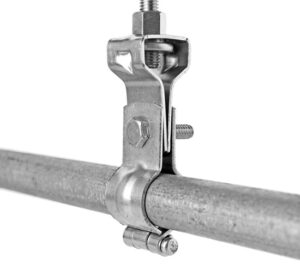
Choosing the right pipe hanger or support depends on more than pipe size. Pipe material, operating load, temperature, expected movement, installation orientation, environment, and required support spacing can all affect which type of support is appropriate for a piping system.
The right support carries the required load while controlling or allowing movement where needed. An incorrect choice can contribute to excessive sagging, vibration, stress on piping and connections, or unwanted movement as operating conditions change.
In this guide, we’ll look at the different types of pipe hangers and supports, the factors that affect selection and spacing, and what to consider when choosing support materials for your piping system.
What Are Pipe Hangers and Supports?
Pipe hangers and supports are components used to carry the weight of piping and control how it is positioned or allowed to move within a piping system.
Although the terms are often used together, they aren’t exactly the same:
- Pipe hangers typically suspend piping from an overhead structure using components such as rods, clamps, or clevis hangers.
- Pipe support is the broader term and can include components used to carry, guide, restrain, anchor, or accommodate movement in piping.
The specific function matters. Some supports are designed primarily to carry weight, while others allow controlled movement from thermal expansion, guide the pipe in a particular direction, or restrain movement at a designated point.
That is why selecting a support starts with understanding what the piping system needs the support to do, not simply finding a component that fits the pipe.
What Are the Different Types of Pipe Supports?
Pipe hangers and supports serve different purposes depending on how the pipe is installed and how it needs to behave during operation. Some primarily carry weight, while others accommodate movement, provide restraint, or support vertical piping.
Here are several common types and the roles they can perform:
| Support Type | Primary Function | Typical Application | Key Selection Consideration |
|---|---|---|---|
| Clevis Hanger | Suspends horizontal pipe from above | Overhead horizontal piping | Pipe size, load, and required movement |
| Riser Clamp | Supports vertical piping | Vertical pipe runs and risers | Vertical load and attachment location |
| Rod/Hanger Assembly | Suspends piping from a structure | Overhead installations | Load and required elevation |
| Split Ring Hanger | Supports lighter piping | Smaller, light- to medium-duty piping | Pipe size and operating load |
| Strap Hanger | Provides simple support for lighter pipe | Smaller piping runs | Load limitations and installation requirements |
| Saddle Support | Cradles and distributes the load of horizontal pipe | Larger horizontal piping | Pipe load and load distribution |
| Spring Support | Carries load while accommodating vertical movement | Piping affected by temperature changes | Expected movement and operating load |
| Roller Support | Supports pipe while allowing longitudinal movement | Piping subject to thermal expansion or contraction | Direction and amount of movement |
| Pipe Shoe/Base Support | Transfers pipe load to the supporting structure | Larger or heavier horizontal piping | Load, elevation, and movement requirements |
| Anchor | Restrains pipe movement at a designated location | Locations where movement must be controlled | Forces transferred to the pipe and supporting structure |
These categories describe the function of the support, but they don’t provide a complete specification. The correct component also needs to meet the required dimensions, load rating, material, temperature, movement, and installation requirements of the piping system.
How Do You Choose the Right Pipe Hanger or Support?
Choosing a pipe hanger or support starts with understanding what it will need to carry and how the piping is expected to behave during operation.
Several factors need to be considered:
Pipe size and weight. Larger or heavier pipe creates greater loads on its supports. Pipe material and wall thickness also contribute to the weight the support must carry.
Fluid and operating load. The support needs to account for more than the empty pipe. The weight of the fluid, insulation, valves, and other components can add significantly to the total operating load.
Horizontal vs. vertical piping. Orientation changes how the pipe’s weight is carried. Horizontal runs require support along their length, while vertical piping may require clamps or other components designed to carry vertical loads.
Temperature and thermal movement. Pipe can expand and contract as temperatures change. Depending on the system, supports may need to allow controlled movement rather than rigidly restrain the pipe.
Vibration. Pumps, compressors, equipment, and operating conditions can introduce vibration into a piping system. Support selection and placement need to account for those forces where they are present.
Operating environment. Outdoor exposure, moisture, chemicals, washdowns, and other environmental conditions can influence the appropriate support material and finish.
Support spacing. Supports need to be positioned at intervals appropriate for the pipe and operating conditions. Too much distance between supports can allow excessive sagging or place additional stress on the piping system.
The right support needs to carry the load while supporting, restraining, or allowing movement as the system requires.
What Determines Pipe Support Spacing?
There isn’t one support spacing distance that works for every piping system. Spacing needs to account for the pipe’s ability to carry its operating load without excessive sagging or stress while also accommodating the way the system is designed to move.
Key considerations include:
- Pipe characteristics: Material, size, and wall thickness can all affect support requirements.
- Operating load: Pipe contents, insulation, valves, fittings, and other concentrated loads add to the weight that must be carried.
- Operating conditions: Temperature, movement, vibration, and orientation can influence both support placement and the type of support required.
- System requirements: Project specifications, engineering requirements, codes, and standards may establish spacing or support criteria for a particular system.
For these reasons, a general pipe support spacing chart shouldn’t be treated as a universal specification. Support spacing should follow the requirements established for the pipe material, system, and application.
What Materials Are Used for Pipe Hangers and Supports?
The material used for a pipe hanger or support needs to withstand both the load of the piping system and the environment where it is installed. Carbon steel and stainless steel are common choices, while coatings and finishes may also be specified for additional protection.
When selecting a support material, consider:
- Pipe material: The support needs to be compatible with the pipe and the requirements established for the system.
- Corrosive exposure: Moisture, chemicals, washdowns, outdoor conditions, and other environmental factors can affect the level of corrosion resistance needed.
- Operating temperature: Elevated or changing temperatures can affect both the pipe and support requirements.
- Location: Indoor, outdoor, exposed, and process-area installations may present very different conditions.
- Protective finishes: Galvanizing, coatings, or other protective treatments may be specified depending on the environment and application.
Material compatibility is especially important when different metals come into contact. The pipe material, support material, and installation environment should all be considered together.
Can Stainless Steel Pipe Use Carbon Steel Hangers?
Carbon steel hangers may be used with stainless steel piping in some systems, but material compatibility and the installation environment should be considered. Where dissimilar metals are in direct contact, moisture or another electrolyte can create conditions for galvanic corrosion.
Depending on the system and environment, the established specification may call for isolation between the pipe and support, a protective barrier, or a different support material.
The support material should therefore be selected as part of the overall piping specification, rather than based on the hanger’s load capacity alone.
Pipe Hangers and Support FAQ
What are the different types of pipe hangers?
Common types include clevis hangers, riser clamps, rod and hanger assemblies, split ring hangers, strap hangers, saddle supports, spring supports, roller supports, pipe shoes, and anchors. Each performs a different function depending on the pipe orientation, load, movement, and installation requirements.
How do I choose a pipe hanger?
Start with the pipe size and material, then consider the total operating load, orientation, temperature, expected movement, vibration, environment, and required support spacing. The hanger or support needs to fit the pipe while also performing the required load-carrying, movement, or restraint function.
How far apart should pipe supports be?
There is no universal spacing distance for all piping. Support spacing depends on factors such as pipe material and size, wall thickness, operating weight, temperature, orientation, concentrated loads, and applicable project or engineering requirements.
What is the difference between a pipe hanger and a pipe support?
A pipe hanger typically suspends piping from an overhead structure. Pipe support is a broader term that includes components used to carry, guide, restrain, anchor, or accommodate movement in piping systems.
What size pipe hanger do I need?
The hanger needs to match the pipe size and dimensions specified for the installation, but size alone isn’t enough. Its load rating, material, temperature range, movement requirements, and other system specifications also need to be considered.
Can stainless steel pipe use carbon steel hangers?
It can in some applications, but material compatibility and the surrounding environment need to be considered. Where stainless and carbon steel are in direct contact, moisture or another electrolyte can create conditions for galvanic corrosion. The system specification may call for isolation, a protective barrier, or another support material.
How does temperature affect pipe support selection?
Changes in temperature can cause piping to expand and contract. Depending on the amount and direction of movement, a system may require supports that allow controlled movement, such as spring or roller supports, rather than supports that rigidly restrain the pipe.
Choosing the Right Pipe Hangers and Supports
Choosing a pipe hanger or support involves more than matching a component to the pipe size. Operating load, temperature, movement, orientation, environment, and support spacing all play a role in determining what the piping system requires.
Starting with those requirements makes it easier to identify the type, size, and material of support called for by the system specification.
American Stainless & Supply carries pipe hangers, supports, and related PVF for industrial piping applications. When you have an established piping and support specification, our team can source the components you need.
Need pipe hangers or supports for an upcoming job? Talk with our team about your requirements.